

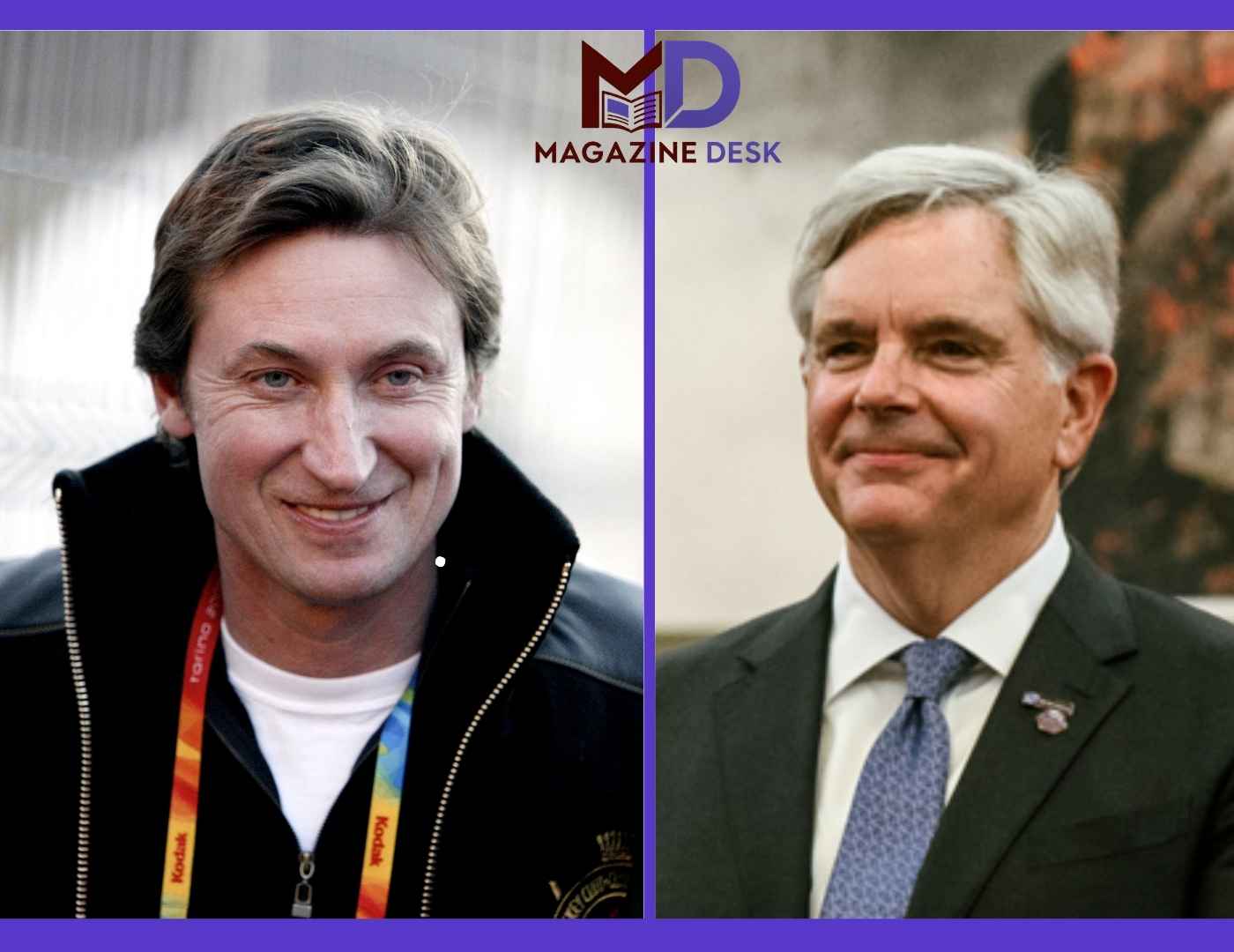
Wayne Gretzky and Larry Culp represent two very different paths to professional excellence. Gretzky is widely regarded as one of the greatest ice hockey players in history, celebrated for his extraordinary scoring ability, vision, and influence on the sport. Culp is a respected American business executive known for leading major industrial organizations and overseeing the transformation of General Electric. Although their careers developed in separate industries, both illustrate how preparation, strategic thinking, teamwork, and consistent execution can contribute to lasting success. There is no established public evidence of a direct partnership between them. Their stories are nevertheless worth exploring together because they offer distinct perspectives on performance, leadership, decision-making, and achievement.
Wayne Gretzky and Larry Culp Biography Table
| Biography Detail | Wayne Gretzky | Larry Culp |
|---|---|---|
| Full Name | Wayne Douglas Gretzky | H. Lawrence Culp Jr. |
| Known As | The Great One | Larry Culp |
| Date of Birth | January 26, 1961 | Not publicly specified in the cited company biography |
| Age | 65 years old (as of October 2026) | 62 years old (reported in GE Aerospace’s 2026 annual report) |
| Birthplace | Brantford, Ontario, Canada | United States |
| Nationality | Canadian | American |
| Profession | Former professional ice hockey player, sports executive | Business executive |
| Famous For | Being widely regarded as one of hockey’s greatest players | Leading GE through restructuring and serving as GE Aerospace’s chairman and CEO |
| Father | Walter Gretzky | Not publicly specified in the cited biography |
| Education | Developed his hockey skills through youth and junior hockey | Washington College; MBA from Harvard Business School |
| Major Career | NHL, 1979–1999 | Danaher, General Electric, GE Aerospace |
| Teams / Companies | Edmonton Oilers, Los Angeles Kings, St. Louis Blues, New York Rangers | Danaher Corporation, General Electric, GE Aerospace |
| Major Achievement | Four Stanley Cup championships with Edmonton | Led GE’s transformation and the creation of independent businesses |
| Career Record / Milestone | 2,857 NHL regular-season points | CEO of GE from 2018 to 2024 |
| Retirement / Current Role | Retired from NHL hockey in 1999 | Chairman and CEO of GE Aerospace |
| Spouse | Janet Jones | Not specified in the cited company biography |
| Children | Five | Not specified in the cited company biography |
| Leadership Style | Anticipation, playmaking, teamwork, and preparation | Operational discipline, continuous improvement, safety, and quality |
| Net Worth | Not established here from a verified financial disclosure | Not established here from a verified financial disclosure |
| Public Legacy | Transformative influence on professional hockey | Influential leadership in industrial management and aerospace |
Wayne Gretzky: Early Life and Family Background

Wayne Gretzky developed his passion for hockey during childhood in Brantford, Ontario. His father, Walter Gretzky, played an important role in nurturing that interest and helping him develop his skills. Walter created a backyard skating rink where Wayne could practice regularly, building the foundation for the exceptional vision and puck control that later defined his career. Gretzky began playing organized hockey at a young age and competed against older players as his abilities advanced. His development was not simply a matter of natural talent; consistent practice, family support, and an early understanding of the game helped him progress. Those formative experiences contributed to a playing style that emphasized anticipation, positioning, and intelligent decision-making.
Wayne Gretzky’s Rise to Hockey Greatness
Gretzky’s professional journey began in the World Hockey Association before he joined the NHL with the Edmonton Oilers in 1979. He quickly established himself as an exceptional offensive player, combining scoring ability with remarkable passing and awareness of teammates’ positions. During his years with Edmonton, Gretzky helped the Oilers become a dominant force in professional hockey. The team won four Stanley Cup championships between 1984 and 1988, cementing his reputation as a transformative player. His performances also attracted international attention and helped increase the popularity of hockey across North America. Gretzky’s success reflected more than individual statistics: he elevated the performance of teammates and influenced how coaches and fans understood offensive strategy.
Wayne Gretzky’s Records and Career Achievements
Wayne Gretzky’s statistical achievements remain central to his legacy. He won the Hart Memorial Trophy as the NHL’s most valuable player nine times and earned the Art Ross Trophy as the league’s leading regular-season scorer ten times. He finished his NHL career with 2,857 regular-season points, comprising goals and assists, a total that remains the league’s career record. Gretzky also became the first NHL player to reach 2,000 career points, illustrating the extraordinary consistency of his performance. His records reflect a combination of individual skill, teamwork, durability, and tactical intelligence. Beyond the numbers, his career changed expectations about what an elite playmaker could accomplish and helped establish a benchmark against which generations of hockey players have been measured.
Life After Retirement: Wayne Gretzky’s Lasting Influence
Gretzky retired from professional hockey in 1999, ending a playing career that had spanned two decades in the NHL. His influence continued through broadcasting, business ventures, public appearances, and involvement in hockey development. He later served as head coach of the Phoenix Coyotes and remained a prominent ambassador for the sport. His name is also closely associated with hockey’s international growth and the increasing visibility of professional ice hockey in markets beyond its traditional centers. Gretzky’s career illustrates how an athlete can remain influential after leaving competition. His legacy is preserved not only through awards and records but also through the players, coaches, and fans who continue to study his approach to the game.
Larry Culp: Early Life and Education
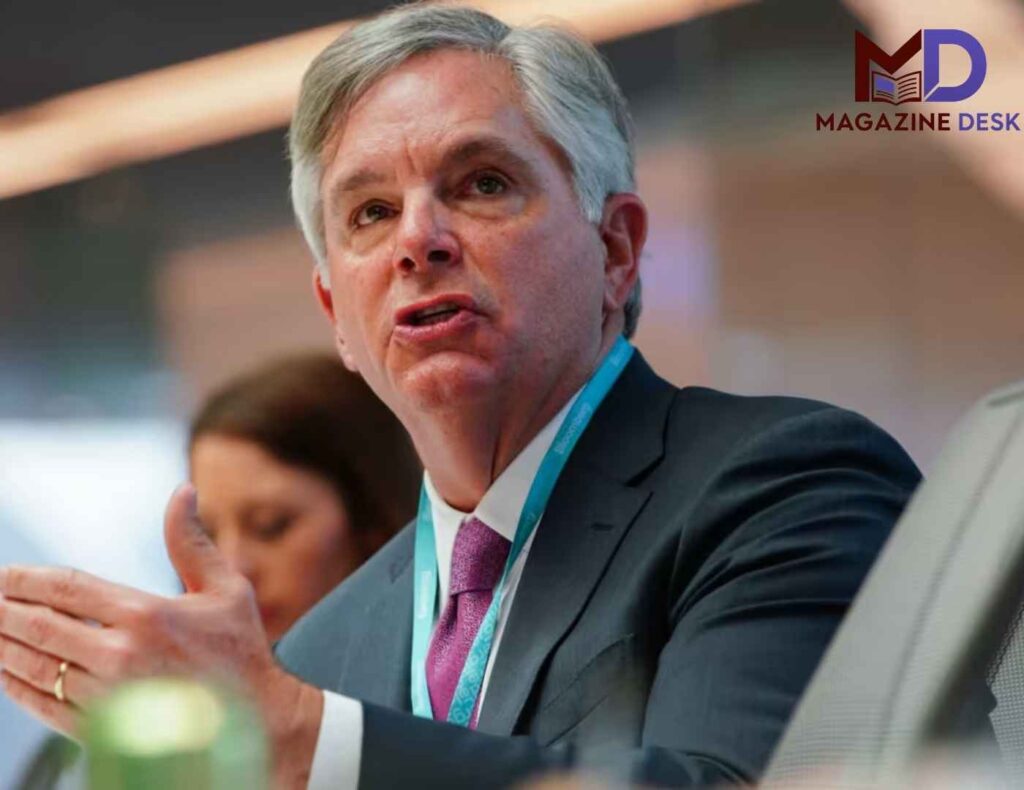
H. Lawrence Culp Jr., commonly known as Larry Culp, developed his professional foundation through business education and early management experience. He earned a bachelor’s degree in economics from Washington College and later completed an MBA at Harvard Business School. These qualifications prepared him for a career involving operational management, organizational strategy, and corporate decision-making. Unlike a public-facing sports figure, Culp built his reputation primarily through business results and leadership roles within large organizations. His career demonstrates the value of combining formal education with practical experience and a willingness to take responsibility for complex operations. Over time, he became known for emphasizing measurable improvements, clear priorities, and disciplined execution rather than relying solely on broad strategic promises.
Larry Culp’s Career at Danaher Corporation
Larry Culp joined Danaher Corporation in 1990, beginning a long career within a diversified industrial and technology business. He advanced through several leadership positions and became president and CEO in 2001, remaining in that role until 2014. During his tenure, Danaher expanded substantially, with the company reporting significant growth in both revenue and market value. Culp became associated with a management philosophy that emphasized continuous improvement, operational discipline, and measurable customer benefits. These principles helped establish his reputation as an executive capable of managing complex organizations across multiple industries. His years at Danaher proved important when he later assumed responsibility for General Electric, where operational challenges and the need for organizational change demanded a similarly disciplined approach.
Larry Culp and the Transformation of General Electric
In October 2018, Larry Culp became CEO of General Electric, making history as the first outsider appointed to lead the company in its modern era. GE was facing substantial financial and operational challenges, including high debt and a complex corporate structure. Culp focused on improving financial stability, strengthening operations, and simplifying the company’s portfolio. His leadership involved difficult decisions, including business disposals, debt reduction, and structural changes intended to help GE concentrate on its core industrial capabilities.
The transformation required coordination across major businesses and long-term planning rather than a single quick fix. Culp’s tenure became a prominent case study in corporate restructuring, demonstrating how large organizations may need to change their structure, priorities, and operating practices to address persistent challenges.
GE Aerospace: Larry Culp’s Leadership Today
GE Aerospace became an independent public company in April 2024, with Larry Culp serving as chairman and CEO. The company focuses on aircraft engines, propulsion technologies, related systems, and services supporting commercial and military aviation. Its extensive installed base creates a business model in which maintenance, repairs, and long-term customer relationships are important alongside new engine production. Culp has emphasized safety, quality, delivery, and cost as operational priorities, supported by the company’s FLIGHT DECK management system. He also serves as non-executive chairman of GE HealthCare. His current role requires balancing engineering innovation, manufacturing performance, customer expectations, and long-term investment. These responsibilities place him at the center of a complex global industry in which reliability and precision are essential.
Wayne Gretzky and Larry Culp: Are They Connected?
Despite appearing together in online searches and articles, Wayne Gretzky and Larry Culp do not have a widely documented personal or professional relationship. Gretzky built his reputation through professional hockey, while Culp’s career developed through industrial management and corporate leadership. Their names have appeared together in conference-related coverage, including a report discussing business figures at the Milken Institute Global Conference and a hockey analogy attributed to another speaker. That context does not establish that Gretzky and Culp met, worked together, or participated in a joint project.
Their shared appearance in search results is therefore best understood as a combination of separate public profiles and references in broader discussions. Any claim of a partnership would require reliable evidence that is not currently established.
Wayne Gretzky and Larry Culp Comparing Their Leadership Styles
Although their professional environments are very different, Wayne Gretzky and Larry Culp offer useful examples of leadership through preparation and awareness. Gretzky became famous for anticipating how a play would develop rather than merely reacting to the puck’s current position. His ability to read the game helped him create opportunities for himself and his teammates. Culp, by contrast, has emphasized understanding operational performance, identifying problems, and establishing systems for continuous improvement. In both cases, effective decisions depend on recognizing patterns and acting before challenges become harder to manage. However, sports leadership often unfolds in seconds, whereas corporate transformation may require years. Comparing their approaches is most useful when the differences between their roles are acknowledged.
Strategic Thinking: Anticipation in Sports and Business

Strategic thinking is one of the most valuable connections between Gretzky’s athletic achievements and Culp’s executive career. Gretzky’s success depended on predicting where teammates and opponents would move, allowing him to create passing opportunities before others recognized them. Culp’s work requires evaluating customer needs, industrial trends, operational risks, and investment priorities to position a business for future demand. Neither approach relies entirely on reacting to immediate events. Both require gathering information, recognizing patterns, and making decisions while outcomes remain uncertain. The comparison also highlights an important distinction: a hockey player’s prediction may influence a single play, while an executive’s decisions can affect employees, customers, suppliers, and investors over many years.
Wayne Gretzky and Larry Culp: Leadership, Excellence, and Success
Wayne Gretzky and Larry Culp are recognized for their achievements in two different fields: professional ice hockey and business leadership. Wayne Gretzky and Larry Culp demonstrate how dedication, strategic thinking, and consistent effort can contribute to professional success. Wayne Gretzky, famously known as “The Great One,” holds the NHL career record of 2,857 regular-season points, establishing an extraordinary legacy in hockey.
Larry Culp, meanwhile, is an experienced American executive who has led major industrial organizations, including Danaher and General Electric, and serves as chairman and CEO of GE Aerospace. Wayne Gretzky and Larry Culp offer different perspectives on teamwork, preparation, adaptability, and decision-making. Although no direct partnership between Wayne Gretzky and Larry Culp has been established, their professional journeys provide valuable lessons about leadership and continuous improvement. By examining Wayne Gretzky and Larry Culp, readers can appreciate how talent, experience, and disciplined execution support lasting achievements.
Wayne Gretzky and Larry Culp Teamwork and Building High-Performing Organizations
Teamwork was fundamental to Gretzky’s success, even though his individual records often attracted the most attention. Hockey depends on coordinated movement, shared responsibilities, trust, and communication. A player can create an opportunity, but teammates must recognize it and execute effectively for the team to benefit. Culp’s leadership at large companies similarly depends on collaboration among engineers, factory employees, managers, suppliers, and customer-facing teams. Corporate performance cannot be sustained by the CEO alone. Both careers therefore demonstrate that individual talent has greater impact when supported by a well-functioning team. The settings differ, but the underlying lesson is consistent: shared goals, clear roles, and reliable communication help people turn individual capabilities into collective results.
Wayne Gretzky and Larry Culp Discipline, Preparation, and Consistent Performance
Gretzky’s remarkable statistics were built through years of practice, observation, and repeated refinement of his skills. His early development illustrates how consistent effort can turn potential into elite performance. Culp’s career provides a different example of discipline through operating systems, performance measurement, and organizational routines. His management approach emphasizes making improvements repeatable rather than treating success as a one-time event. In sports, preparation supports faster decisions under pressure; in business, disciplined systems help organizations maintain standards across complex operations. Neither field offers a guarantee of success, and both involve setbacks. Nevertheless, Gretzky’s training and Culp’s operational methods demonstrate why preparation and consistency are often more dependable foundations for performance than inspiration alone.
Wayne Gretzky and Larry Culp Challenges, Pressure, and Decision-Making
Professional athletes and business executives face different kinds of pressure, but both must make decisions when the stakes are high. Gretzky competed against elite opponents in games where momentum could change quickly and individual mistakes could affect the outcome. Culp assumed leadership of GE during a period of financial strain and organizational uncertainty, requiring him to make difficult decisions with consequences extending beyond a single quarter. In both cases, effective performance depends on assessing available information, maintaining focus, and adjusting when circumstances change. The comparison should not minimize the very different responsibilities involved. Instead, it shows that preparation, communication, and clear priorities can help people respond more thoughtfully to pressure in demanding professional environments.
Legacy and Influence Beyond Their Professions Wayne Gretzky and Larry Culp
Wayne Gretzky’s legacy is visible in hockey records, coaching discussions, youth development, and the sport’s popular culture. His playing style helped demonstrate how anticipation and passing can be as influential as speed or physical strength. Larry Culp’s influence is measured differently, through business performance, organizational changes, leadership practices, and the development of industrial companies. His work has attracted attention from business schools and corporate analysts interested in operational improvement and restructuring. Both men have become reference points within their respective fields, although their achievements should be evaluated using standards appropriate to each profession. Gretzky is remembered primarily for athletic excellence, while Culp is assessed through leadership decisions and the performance of complex organizations.
Lessons Readers Can Learn from Wayne Gretzky and Larry Culp
The careers of Wayne Gretzky and Larry Culp offer several practical lessons for students, professionals, and aspiring leaders. First, preparation creates opportunities: Gretzky developed his hockey intelligence through repeated practice, while Culp built expertise through years of management experience. Second, understanding the bigger picture matters. Gretzky anticipated the next play, and Culp has emphasized examining operations and customer needs before making strategic decisions. Third, teamwork makes individual contributions more effective. Finally, progress usually requires patience and adjustment rather than expecting immediate results. These lessons do not mean that athletic success and corporate leadership are identical. Instead, their stories show how different forms of expertise can share common foundations, including discipline, learning, accountability, and a willingness to improve.
Wayne Gretzky and Larry Culp: Inspiring Stories of Excellence and Success
Wayne Gretzky and Larry Culp are influential figures known for their achievements in different professional fields. Wayne Gretzky and Larry Culp represent excellence in sports and business, with Gretzky widely regarded as one of the greatest ice hockey players in history and Culp recognized for his leadership in the industrial sector. Wayne Gretzky and Larry Culp demonstrate how dedication, strategic thinking, and consistent performance can contribute to success. Gretzky earned worldwide recognition for his remarkable hockey records, including 2,857 NHL regular-season points, while Culp built his executive reputation through leadership roles at Danaher, General Electric, and GE Aerospace, where he serves as chairman and CEO.
Although Wayne Gretzky and Larry Culp have no established public professional partnership, their individual stories offer valuable lessons in teamwork, discipline, innovation, and leadership. Studying Wayne Gretzky and Larry Culp helps readers understand how preparation, adaptability, and a commitment to continuous improvement can support long-term achievement.
Conclusion: Wayne Gretzky and Larry Culp Two Different Paths to Excellence
Wayne Gretzky and Larry Culp have built influential legacies in distinct professional worlds. Gretzky’s extraordinary hockey career established him as one of the sport’s most celebrated players, with records, championships, and a lasting influence on how hockey is played and understood. Culp has earned recognition through corporate leadership, particularly his work at Danaher, General Electric, and GE Aerospace. There is no established public evidence of a direct relationship or partnership between them, but their careers provide separate examples of preparation, strategic thinking, teamwork, and sustained performance. Examining their achievements side by side offers a useful reminder that excellence takes different forms. Whether on the ice or in the boardroom, lasting success depends on learning, sound decisions, and consistent execution.
Frequently Asked Questions About Wayne Gretzky and Larry Culp
Who is Wayne Gretzky?
Wayne Gretzky is a Canadian former professional ice hockey player widely considered one of the greatest in NHL history. Nicknamed “The Great One,” he holds the NHL career record for regular-season points and won four Stanley Cup championships with the Edmonton Oilers.
Who is Larry Culp?
Larry Culp, whose full name is H. Lawrence Culp Jr., is an American business executive. He became CEO of General Electric in 2018 and became chairman and CEO of GE Aerospace when the company launched as an independent public company in April 2024.
Are Wayne Gretzky and Larry Culp related?
There is no publicly documented family relationship between Wayne Gretzky and Larry Culp. Their established biographies describe separate backgrounds and careers in professional sports and corporate management.
Have Wayne Gretzky and Larry Culp worked together?
No publicly confirmed joint project or professional partnership between them has been established. Their names have appeared in broader conference-related coverage, but that does not prove that they met or collaborated.
What is Wayne Gretzky best known for?
Gretzky is best known for his exceptional scoring and playmaking abilities, four Stanley Cup championships with Edmonton, nine Hart Memorial Trophies, and the NHL career record of 2,857 regular-season points.
What is Larry Culp known for in business?
Culp is known for his leadership at Danaher and for guiding General Electric through a major financial and organizational transformation. He currently leads GE Aerospace and emphasizes operational improvement, safety, quality, delivery, and cost.
What can we learn from Wayne Gretzky and Larry Culp?
Their careers illustrate the value of preparation, strategic thinking, teamwork, adaptability, and continuous improvement. Although hockey and corporate leadership demand different skills, both show how disciplined decisions and coordinated effort can contribute to sustained achievement.
Don’t miss out—explore more stories and inspiring celebrity profiles only on Magazine Desk
