


Bill Nighy Davy Jones is a memorable combination of outstanding acting and groundbreaking visual effects. British actor Bill Nighy brought the legendary pirate captain to life in Pirates of the Caribbean: Dead Man’s Chest (2006) and Pirates of the Caribbean: At World’s End (2007). Although audiences saw a terrifying sea creature with a face covered in tentacles, the character’s expressions, voice, movements, and emotional depth came from Nighy’s performance.
Davy Jones became one of the franchise’s most distinctive antagonists because he was more than a frightening creature. Beneath his unusual appearance was a tragic story involving love, betrayal, loneliness, and revenge. Nighy’s portrayal gave the character a commanding personality while revealing glimpses of the man he once was. This article explores Bill Nighy’s career, how he portrayed Davy Jones, the technology behind the character, and why the role remains an important part of modern fantasy cinema.
Bill Nighy Biography Table
| Detail | Information |
|---|---|
| Full name | William Francis Nighy |
| Known as | Bill Nighy |
| Date of birth | 12 December 1949 |
| Birthplace | Caterham, Surrey, England |
| Nationality | British |
| Profession | Actor |
| Famous character | Davy Jones |
| Major franchise | Pirates of the Caribbean |
| Davy Jones debut | Dead Man’s Chest (2006) |
| Second appearance | At World’s End (2007) |
| Other notable films | Love Actually, Shaun of the Dead, About Time |
| Acting style | Expressive, understated, distinctive voice |
| Known for | Film, television, and theatre performances |
Who Is Bill Nighy, the Actor Behind Davy Jones?

Bill Nighy is an English actor celebrated for his versatility and distinctive screen presence. Rather than depending on a single genre, he has built a career playing complicated, eccentric, humorous, and emotionally vulnerable characters. His performance as Billy Mack in Love Actually showed his talent for comedy, while his roles in The Constant Gardener and Living demonstrated his dramatic range. When he joined Pirates of the Caribbean, Nighy faced a different challenge: audiences would rarely see his natural face in the role. His ability to communicate personality through voice, movement, and expression made him an inspired choice for Davy Jones, a character whose computer-generated appearance could easily have overshadowed the actor behind it.
Why Bill Nighy Davy Jones Remains an Iconic Movie Character
Bill Nighy Davy Jones remains one of the most memorable combinations of acting and visual effects in modern cinema. The portrayal of Bill Nighy Davy Jones in Pirates of the Caribbean: Dead Man’s Chest introduced audiences to a terrifying yet emotionally complex pirate captain. Through his distinctive voice and expressive performance, Bill Nighy made Davy Jones feel like a real character rather than just a computer-generated villain. The success of Bill Nighy Davy Jones continued in At World’s End, where viewers discovered more about the captain’s tragic past and his relationship with Calypso.
Fans continue to appreciate Bill Nighy Davy Jones for his unusual appearance, powerful dialogue, and unforgettable personality. The story of Bill Nighy Davy Jones also highlights the importance of motion-capture technology in filmmaking. Ultimately, Bill Nighy Davy Jones remains a standout example of how talented acting and advanced visual effects can create a legendary movie character.
Bill Nighy Davy Jones: How the Casting Happened
The casting of Bill Nighy as Davy Jones brought together a respected British performer and one of the most ambitious fantasy productions of its time. Nighy had watched the original Pirates of the Caribbean: The Curse of the Black Pearl and enjoyed its adventurous atmosphere. Director Gore Verbinski subsequently approached him about appearing in the sequel, and Nighy recalled that he was impressed by the script. He accepted the role enthusiastically, despite the unusual technical demands involved.
The Story of Davy Jones Before He Became a Villain
One reason Davy Jones stands apart from conventional movie villains is his tragic history. In the franchise’s mythology, he was once a human being who loved Calypso, a powerful sea goddess. Their relationship became associated with a painful duty and an expectation of loyalty that Jones eventually found unbearable. When he felt betrayed and abandoned, his emotional suffering turned into resentment. Rather than processing that pain, he embraced bitterness and became increasingly cruel. His transformation into the monstrous captain reflects his inner deterioration as much as any supernatural curse. This backstory helps explain why the character’s anger feels personal rather than simply evil, adding emotional substance to the visual spectacle.
Bill Nighy Davy Jones and the Tragedy of Lost Love
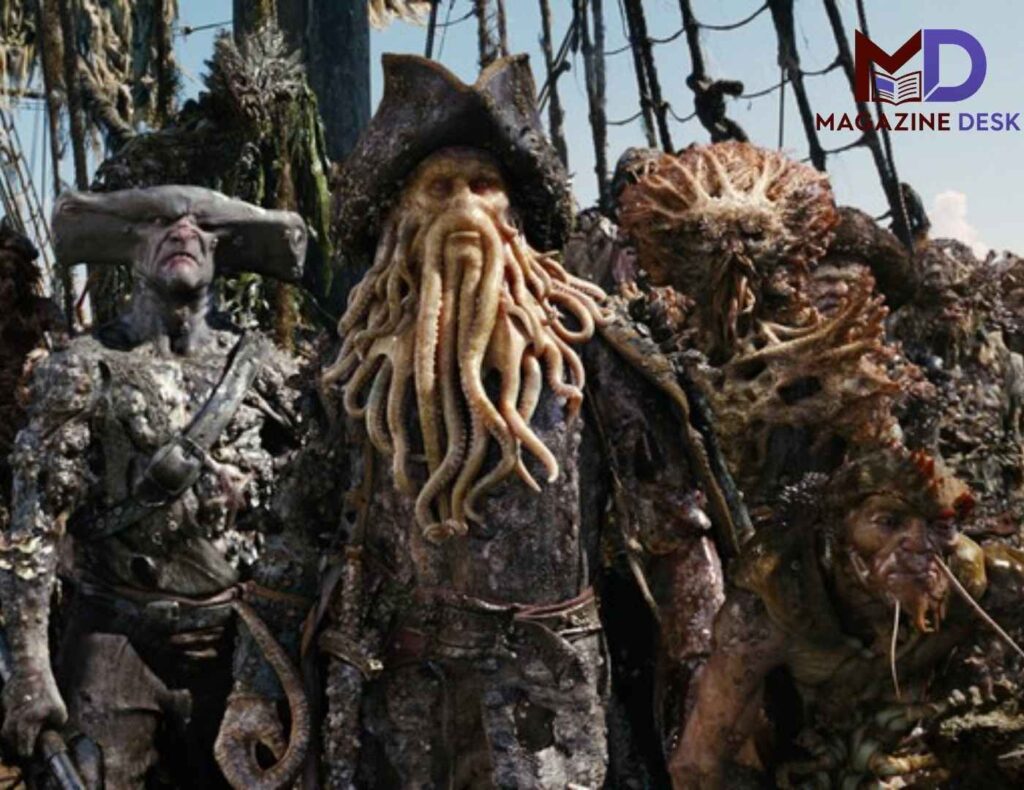
The connection between love and cruelty is central to understanding Davy Jones. His relationship with Calypso suggests that profound disappointment can shape a person’s choices, but the films do not present his actions as justified. Jones allows heartbreak to become a reason for controlling and punishing others. That contradiction gives the character depth: he understands emotional suffering, yet repeatedly causes suffering himself. Bill Nighy’s restrained performance makes this conflict especially effective. Instead of turning Jones into a constantly shouting monster, he conveys bitterness through pauses, controlled speech, and subtle changes in expression. The result is a villain whose anger seems to have developed over a long period, making his history as important as his supernatural powers.
The Lasting Legacy of Bill Nighy Davy Jones
Bill Nighy Davy Jones remains a popular topic among fans of fantasy movies and the Pirates of the Caribbean franchise. The performance of Bill Nighy Davy Jones demonstrates how an actor can bring emotion and personality to a digitally created character. Through Bill Nighy Davy Jones, audiences experienced a villain who combined supernatural power with a tragic personal history. The success of Bill Nighy Davy Jones in Dead Man’s Chest helped establish Davy Jones as one of the franchise’s most recognizable antagonists. In At World’s End, Bill Nighy Davy Jones became even more compelling as the story explored his complicated relationship with Calypso. Fans admire Bill Nighy Davy Jones for his distinctive voice, expressive performance, and frightening appearance.
The character of Bill Nighy Davy Jones also showcases the creative potential of motion-capture technology. Furthermore, Bill Nighy Davy Jones illustrates how digital animation can preserve the subtle details of an actor’s performance. The memorable design of Bill Nighy Davy Jones continues to attract attention from movie enthusiasts. Ultimately, Bill Nighy Davy Jones remains an outstanding example of acting, storytelling, and visual effects working together to create an unforgettable cinematic villain.
How Bill Nighy Played Davy Jones Without Traditional Makeup
One of the most surprising facts about Bill Nighy Davy Jones is that the actor did not simply sit in a makeup chair while technicians attached dozens of tentacles to his face. The finished character was created digitally. Nighy performed on set wearing a motion-capture outfit, facial markers, and a skullcap fitted with reference points. The equipment helped the visual-effects team translate his performance into the computer-generated character. Nighy famously described the experience of wearing the unusual costume as uncomfortable and comical, especially when surrounded by actors wearing traditional pirate clothing.
The Motion-Capture Technology Behind Davy Jones
Motion capture allowed the filmmakers to retain the details of Nighy’s performance while transforming his appearance. Instead of recording his movements in isolation and adding the character later, the production captured his performance on the film set, where he could interact directly with other actors. This approach helped preserve the timing of conversations, the physical relationships between characters, and the natural rhythm of dramatic scenes. The visual-effects artists at Industrial Light & Magic (ILM) then used the recorded information to build the digital figure. The process required close cooperation between actor and animators. Nighy supplied the performance, while the artists translated that performance into a believable sea creature capable of appearing convincingly within a live-action world.
Bill Nighy Davy Jones: The Importance of His Eyes and Expressions
Even though Davy Jones has a face dominated by tentacles, his eyes remain one of the most expressive parts of his design. They help audiences recognize the intelligence and emotion beneath his frightening appearance. Nighy’s performance relies on controlled gestures, slight changes in posture, and carefully timed reactions rather than exaggerated movements. These choices allow the character to communicate authority without losing subtlety. The eyes also make moments of vulnerability more effective, particularly when Jones remembers his past or confronts the consequences of his choices. The visual-effects team preserved essential details of Nighy’s performance, helping audiences connect the digital creature with the human actor who created his personality.
How Bill Nighy Developed Davy Jones’s Scottish Accent
Davy Jones has a distinctive Scottish-sounding accent that separates him from other pirates in the franchise. Nighy wanted the character to sound different from the other major figures, giving him a voice that felt powerful, mysterious, and slightly unsettling. He explained in an interview that he drew inspiration from hearing an older Scottish man and developed the sound into his own interpretation.
Bill Nighy Davy Jones in Pirates of the Caribbean: At World’s End
In Pirates of the Caribbean: At World’s End (2007), Davy Jones’s personal history becomes increasingly important to the larger conflict. The film explores his connection with Calypso and reveals more about the decisions that shaped his transformation. His relationship with the supernatural forces of the sea also affects the balance of power among the pirates. Nighy’s performance develops the character beyond the frightening captain introduced in the previous installment. The audience sees more of his emotional conflict, although his cruelty remains central to the story. By combining supernatural spectacle with personal tragedy, the film gives Jones a more complicated role in the franchise’s dramatic conclusion.
Bill Nighy Davy Jones Human Appearance as Davy Jones
Although most of the character is digitally created, At World’s End briefly presents Jones in human form through a flashback. This moment is important because it connects the frightening captain with the person he once was. Nighy appears as the human version of Jones, allowing viewers to understand the contrast between his earlier identity and his later monstrous appearance. The scene gives emotional weight to the character’s relationship with Calypso and makes his transformation feel like the outcome of a personal tragedy rather than a random supernatural event. It also demonstrates the range of the actor’s contribution: Nighy does not merely provide a voice for a digital villain but helps establish the character’s humanity.
What Makes Bill Nighy’s Davy Jones Different From Other Villains?
Many fantasy villains are memorable because they possess extraordinary abilities, command powerful armies, or threaten the entire world. Davy Jones has these qualities, but his appeal also comes from his contradictions. He is disciplined yet cruel, intelligent yet consumed by resentment, and powerful yet emotionally vulnerable. His supernatural appearance creates immediate fear, while his backstory encourages audiences to consider the person beneath the monster. Nighy’s subtle acting prevents these traits from becoming exaggerated caricatures. He makes Jones feel like an individual with a history, a temper, and a particular way of speaking. That mixture of theatrical design and restrained performance distinguishes him from more straightforward fantasy antagonists.
The Relationship Between Bill Nighy Davy Jones and Jack Sparrow
The conflict between Davy Jones and Jack Sparrow, played by Johnny Depp, provides much of the tension in Dead Man’s Chest. Jack’s agreement with Jones creates a personal obligation that becomes increasingly difficult to escape. Jones treats the arrangement as a matter of authority and payment, while Jack relies on cleverness and improvisation to find a way out. Their contrasting personalities make their encounters entertaining as well as threatening. Jack is unpredictable and humorous, whereas Jones is controlled, severe, and unforgiving. The dynamic works because neither character can be reduced to a simple stereotype. Nighy’s imposing delivery makes Jones a convincing opponent for Depp’s unconventional pirate, giving their scenes a memorable dramatic balance.
Davy Jones and the Flying Dutchman’s Crew

The Flying Dutchman’s crew contributes significantly to the atmosphere surrounding Davy Jones. Like their captain, many crew members possess bodies shaped by marine life, giving the ship an unsettling identity that differs from an ordinary pirate vessel. Their unusual appearances suggest the consequences of remaining under Jones’s command for too long. The crew also helps communicate his authority: their loyalty is tied to fear, obligation, and the supernatural rules governing the ship. From a filmmaking perspective, these characters required detailed digital design and animation, similar to the work completed on Jones himself. Together, captain, ship, and crew create a coherent fantasy world that feels stranger and more threatening than a conventional pirate adventure.
Bill Nighy’s Career Before and After Davy Jones
Although Davy Jones became one of his most recognizable roles, Bill Nighy had already enjoyed a substantial acting career before entering the Pirates of the Caribbean universe. He gained widespread attention through films such as Love Actually (2003), in which he played the irreverent musician Billy Mack. He also appeared in Underworld, Shaun of the Dead, and The Constant Gardener, demonstrating his ability to move between comedy, fantasy, and serious drama. After the pirate films, Nighy continued to take on varied roles, including performances in The Best Exotic Marigold Hotel, About Time, and Living. His career illustrates how a distinctive supporting role can strengthen an already accomplished performer’s international reputation.
Bill Nighy Davy Jones Acting Style and Distinctive Screen Presence
Bill Nighy is known for combining understated humor with precise delivery and expressive body language. He often communicates a great deal through a pause, a glance, or a change in vocal tone rather than relying on dramatic gestures. These qualities were especially useful when playing Davy Jones because the character’s digital appearance could have made him feel emotionally distant. Nighy supplied the personality that connected the visual design with the story. His performance also demonstrates how an actor’s voice can carry meaning beyond spoken words. The measured rhythm of his dialogue makes Jones sound authoritative, while occasional hints of vulnerability remind audiences that the character has a complicated emotional history.
Awards, Recognition, and the Legacy of Davy Jones
Nighy’s career has received considerable recognition, including a Golden Globe Award for Best Actor in a Miniseries or Television Film for Gideon’s Daughter and a BAFTA Award for Best Actor for Living. His wider body of work has earned appreciation for its variety and subtlety. Davy Jones occupies a distinctive place within that career because it required him to perform through an unfamiliar technological process while remaining emotionally convincing. The character also became an important example of how motion capture and digital animation can work together with traditional acting. Rather than replacing the actor, the technology helped extend his performance into a form that would have been impossible through conventional makeup alone.
Why Bill Nighy Davy Jones Remains Popular Today
Interest in Bill Nighy Davy Jones continues because the character combines an unforgettable design with a compelling personal story. Viewers remember the tentacled beard, the strange voice, the supernatural ship, and the captain’s commanding presence. However, these visual details are only part of the explanation. Jones also embodies themes of heartbreak, responsibility, and the consequences of allowing resentment to determine one’s actions. Nighy’s performance makes those themes accessible without turning the character into a sympathetic hero. The films also remain useful examples of ambitious digital filmmaking, showing how computer-generated characters can carry complex emotional scenes. Together, the acting, storytelling, and visual effects help keep Davy Jones relevant to fans of fantasy cinema.
Final Thoughts on Bill Nighy as Davy Jones
Bill Nighy’s portrayal of Davy Jones demonstrates how acting and visual effects can combine to create a truly memorable screen character. Through motion capture, a distinctive Scottish accent, controlled physical performance, and expressive delivery, Nighy gave the supernatural captain a recognizable personality. Dead Man’s Chest introduced the frightening commander of the Flying Dutchman, while At World’s End explored the tragedy behind his transformation. The result was a villain who could inspire fear while revealing the emotional damage that shaped his decisions. Davy Jones remains one of the standout characters in the Pirates of the Caribbean franchise because his visual spectacle is supported by genuine dramatic depth and a carefully crafted performance.
Frequently Asked Questions About Bill Nighy Davy Jones
1. Did Bill Nighy play Davy Jones in Pirates of the Caribbean?
Yes. Bill Nighy portrayed Davy Jones in Pirates of the Caribbean: Dead Man’s Chest (2006) and Pirates of the Caribbean: At World’s End (2007). His performance was captured on set and transformed into the digitally animated character.
2. Was Davy Jones entirely CGI?
The character’s body and distinctive sea-creature features were created digitally. However, the performance was based on Nighy’s acting, including his expressions, movements, and voice. This combination helped make Jones feel realistic and emotionally expressive.
3. Why does Davy Jones have tentacles instead of a normal beard?
The tentacles are part of the character’s supernatural, sea-creature appearance. They also give him an unmistakable silhouette and contribute to his unsettling personality. The filmmakers used the design to make him visually different from other pirates.
4. What accent does Bill Nighy use for Davy Jones?
Nighy uses a distinctive Scottish-sounding accent. He developed it to give Jones a powerful and unusual voice that would stand apart from the other characters in the franchise.
5. Why did Davy Jones become evil?
Within the films’ fictional mythology, Jones’s heartbreak and troubled relationship with Calypso contribute to his transformation. His resentment and choices eventually lead him toward cruelty, making his history an important part of his character.
6. Which movies feature Bill Nighy as Davy Jones?
He appears as Davy Jones in Dead Man’s Chest (2006) and At World’s End (2007). The two films explore his supernatural power, his conflict with Jack Sparrow, and the personal history behind his villainy.
7. Is Bill Nighy best known only for Davy Jones?
No. Nighy has appeared in many films and television productions, including Love Actually, The Constant Gardener, Shaun of the Dead, and Living. Davy Jones is one of his most recognizable roles, but his career covers a wide range of genres.
Don’t miss out—explore more stories and inspiring celebrity profiles only on Magazine Desk
